
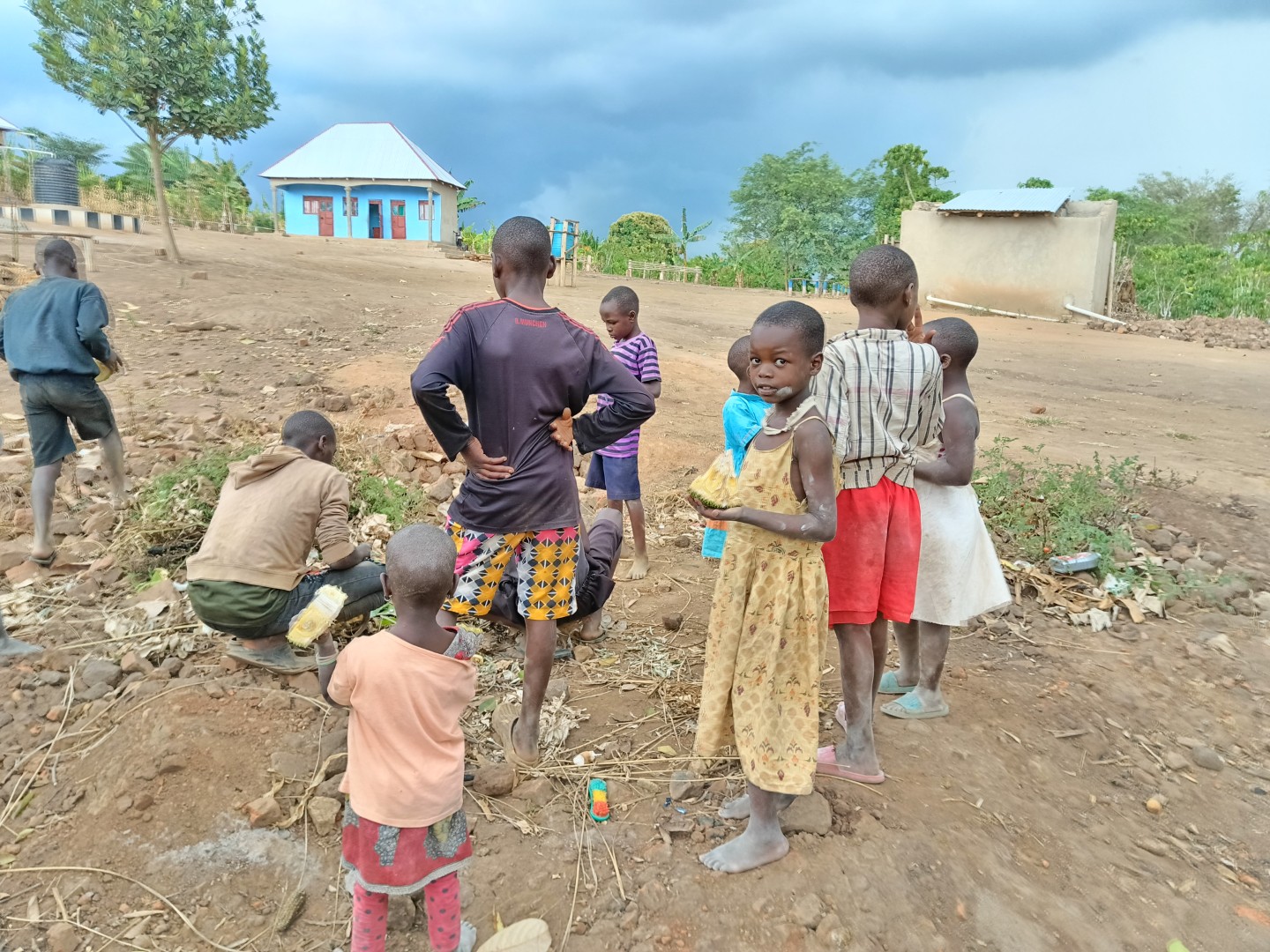
“Poverty is not going empty for a single day and getting something to eat the next day. Poverty is going empty with no hope for the future. Poverty is when your dreams go in vain because nobody is there to help you.”
— Anonymous
The Setting
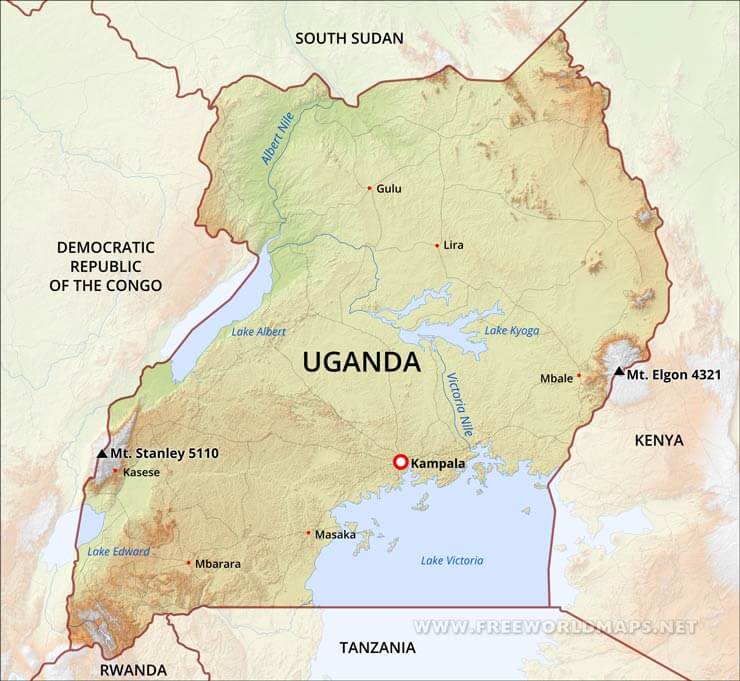
Uganda: The Pearl of Africa
Called “the Pearl of Africa” by Winston Churchill, Uganda is a landlocked East African nation of extraordinary natural beauty and deep human resilience. Home to nearly 45 million people with 65% under the age of 15, it is one of the world’s youngest nations.
But Uganda’s modern history carries deep wounds: two brutal dictatorships, armed conflict that displaced over 2 million people, and an HIV/AIDS epidemic that has orphaned millions of children. The average Ugandan lives on approximately $1 per day. 85% of the workforce depends on subsistence farming.
It is in this reality, not an abstraction, but a daily lived experience that S.D. Christ Centre does its work.
Health Emergency
The Malaria Crisis
WHO Warning (2025): Uganda is one of only four African countries with confirmed partial resistance to artemisinin, the core ingredient in the standard malaria treatment used nationwide. Drug resistance spreads silently, long before clinics detect treatment failures. Uganda may already be facing a larger threat than current data suggests.
30–40%
Of all outpatient visits are malaria-related
For the children at S.D. Christ Centre, this is not a distant statistic. Children under five are the most vulnerable. The Centre’s ability to monitor every child’s health and access treatment is a direct, daily life-saving function of the orphanage.
Orphan Crisis
HIV/AIDS and the Children Left Behind
AIDS is the second leading cause of death in Uganda, killing more than 200 people every single day. It has devastated the 25–40 year-old generation, the parents of Uganda’s children.
2.4M
Children orphaned in Uganda since the epidemic began
Uganda pioneered Africa’s HIV response, reducing infection rates from 30% in 1993 to 5% by 2021. But the legacy of those lost decades continues to produce orphaned children. S.D. Christ Centre exists precisely for them.
Child Mortality & Hunger
The Cost of Malnutrition
Children in sub-Saharan Africa are 14 times more likely to die before the age of 5 than children in high-income countries. Malnutrition is the underlying factor in nearly half of all child deaths under five.
6 Million
Children die annually from malnutrition before their fifth birthday.
1 in 3
Children in sub-Saharan Africa are underweight. Nearly half lack safe drinking water.
45%
Of all child deaths under five are linked to malnutrition as an underlying cause.
Child sacrifice
A Danger Rarely Spoken About
Beyond disease and hunger, children in rural Uganda, orphans especially face a documented threat that rarely makes international headlines: ritual child sacrifice. Rural districts near Kampala are among the worst affected.
Children are targeted because they are seen as more vulnerable and, in the belief system behind these practices, spiritually “purer.” The practice has evolved into a commercial enterprise driven by greed and desperation. Orphaned, unaccompanied children are the most at risk.
Survivors face lasting physical and psychological harm. Some families have resorted to physically marking their children to make them less desirable targets.
“We are not just protecting our children from hunger and disease — but from human sacrifice. We call upon all people of good heart to help us protect the children we already have.”
— Ssemakula David, Founder & Director
S.D. Christ Centre’s safe, structured residential environment is not simply a welfare provision. For many of its children, it is a physical shield.
education
The Education Gap
Only 57% of African children are enrolled in primary education. One in three of those enrolled does not complete school. 40 million school-age children in sub-Saharan Africa receive no education at all.
Girls are disproportionately affected, accounting for 55% of unenrolled primary-aged children. Many children cannot attend school because they are the primary breadwinners for their younger siblings.
When financial barriers are removed, children return immediately. In Madagascar, eliminating school fees drove enrollment from under 50% to 98%. S.D. Christ Centre’s community school and sponsorship model is exactly this intervention.

This is why S.D. Christ Centre exists.
Not to document the crisis. But to step into it, every single day with 320 children and a community that refuses to look away.